
Lily (Lilium)
Lilies are tall, fragrant, trumpet-shaped flowers from the genus Lilium, prized as a luxurious focal flower in bouquets, wedding arrangements and sympathy tributes.
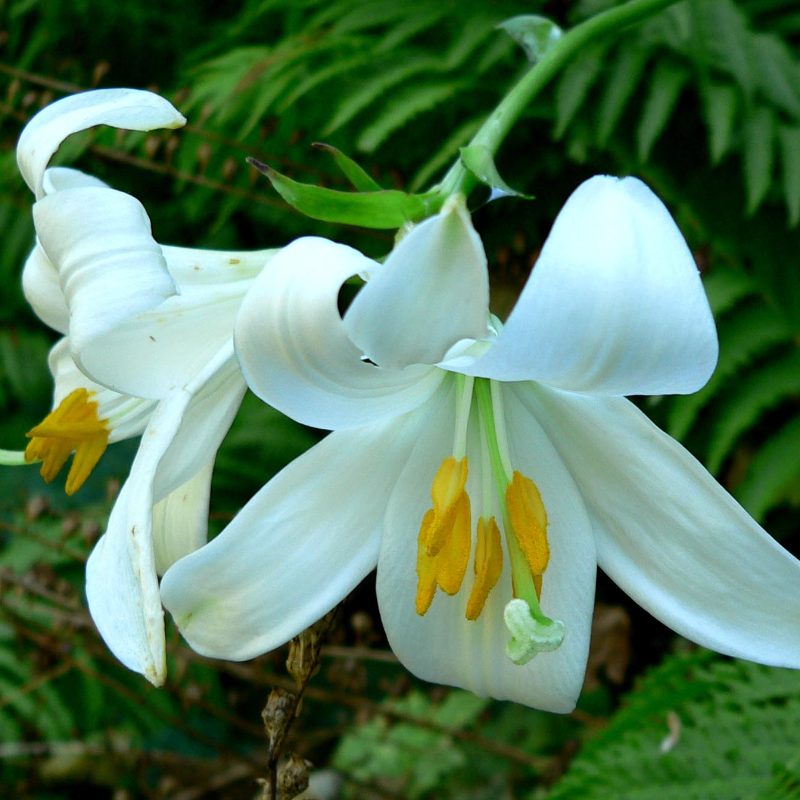
Overview
The lily (genus Lilium, family Liliaceae) is a group of about 100 species of herbaceous flowering plants that grow from bulbs and are native to the temperate Northern Hemisphere. With their large, showy, often fragrant blooms, lilies are among the most popular cut flowers in the world and a signature focal flower in luxury bouquets.
Appearance
Lilies grow on tall, upright stems with narrow leaves arranged along the stalk. Each flower has six tepals (three petals and three petal-like sepals) forming a trumpet, bowl or star shape, with six prominent stamens carrying pollen-heavy anthers. A single stem usually carries several buds that open one after another, which gives lilies a long display life.
Popular Types for Floristry
- Oriental lilies (e.g. 'Stargazer', 'Casa Blanca') – very large, strongly fragrant blooms in white, pink and crimson.
- Asiatic lilies – upward-facing, unscented flowers in bright orange, yellow, red and white.
- LA hybrids (Longiflorum × Asiatic) – sturdy stems, lightly scented, excellent vase life.
- Easter / Trumpet lily (Lilium longiflorum) – pure white trumpets used in weddings and church décor.
Meaning & Symbolism
White lilies represent purity, renewal and remembrance, which is why they are common in wedding and sympathy flowers. Pink lilies express admiration and prosperity, orange lilies signify confidence and passion, and yellow lilies stand for joy and gratitude.
Use in Bouquets
Florists use lilies as a focal flower – the eye-catching bloom around which the rest of the arrangement is built. They pair beautifully with roses, alstroemeria, hydrangea and greenery such as eucalyptus or leatherleaf fern. Because the stems carry several buds, a bouquet with lilies keeps “opening” for days after delivery.
Care & Vase Life
- Cut stems at a 45° angle and place in clean water with flower food.
- Gently remove the orange anthers as the flowers open – the pollen stains fabric and skin.
- Keep away from direct sun, heat and ripening fruit.
- Typical vase life: 10–14 days as successive buds open.
Safety Note
All parts of true lilies (Lilium) are highly toxic to cats – even a small amount of pollen or vase water can cause kidney failure. Keep lily bouquets well out of reach of pets.
Fun Facts
- The lily is one of the oldest cultivated flowers, depicted in Minoan frescoes over 3,500 years old.
- The Madonna lily (Lilium candidum) has been a Christian symbol of the Virgin Mary for centuries.